

Blog
UK Working at Height Regulations: Beginner’s Guide

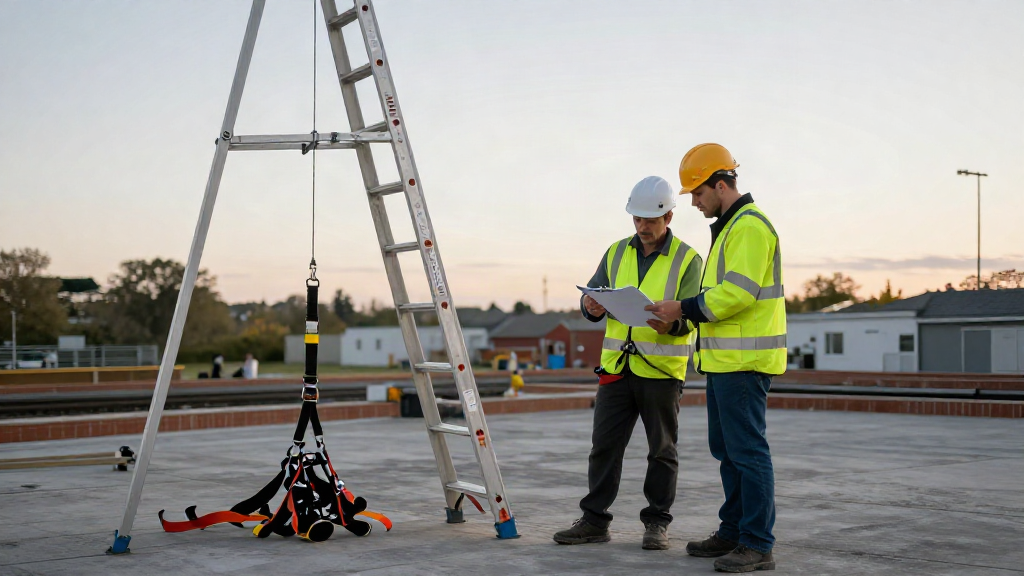
Working at height is one of the most common causes of serious injury in UK workplaces, and it is not only large construction firms that have to get it right. If you run a small utility, telecoms or civils business and someone on your team climbs a ladder, steps onto a roof or works from a platform, the law applies to you exactly as it does to a national contractor. This beginner’s guide sets out what working at height regulations actually require, in plain English, so you can plan a job with confidence and choose the right kit before anyone goes up.
What counts as working at height?
The Work at Height Regulations 2005 define working at height as any work where a person could fall a distance liable to cause personal injury. That includes work above ground level, work at ground level near an opening or edge, and even work below ground level where someone could fall in, such as a trench or a shaft.
The important point for small teams is that there is no magic height threshold. A two-metre fall from a stepladder can be just as serious as one from a scaffold. If a fall is possible, the regulations apply.
Who is responsible?
As an employer, you are the person who must ensure the work is properly planned, supervised and carried out by competent people. If you are self-employed and your work puts you or others at risk, the same duties fall on you. Employees have duties too, but the planning obligation sits firmly with the business.
“Competent” does not automatically mean certified, but it does mean the person has the skills, knowledge and experience to do the task safely, or is supervised while they gain them. For anything beyond low-risk, short-duration work, that usually means formal training.
The hierarchy of control
The regulations are built around a simple order of thinking, often called the hierarchy of control. Work through it in sequence rather than jumping straight to a fall-arrest harness.
- Avoid working at height altogether where you reasonably can. Can the job be done from the ground with extended-reach tools, or by lowering the item instead of climbing to it?
- Prevent falls where the work must be done at height. Collective protection such as guardrails, working platforms and scaffolds protects everyone on site, not just the person wearing a harness.
- Minimise the distance and consequences of a fall where risk remains. This is where fall-arrest equipment, nets and soft-landing systems come in.
Fall arrest is a last line of defence, not a first choice. When it is genuinely the only option, it has to be planned properly and the equipment has to be right for the task.
Start with a risk assessment
Before any job, carry out a risk assessment that covers the specific location and task, not a generic template.
Ask yourself:
- What is the height involved, and what could someone fall onto?
- Is the surface or access point fragile, sloping or unstable?
- Who else could be affected, including members of the public?
- What is the weather forecast, and could wind or rain change the risk?
- What equipment is required, and is it in date and inspected?
- How will someone be rescued if a fall is arrested?
That last point is the one small teams most often miss. A worker left suspended in a harness after a fall can develop suspension trauma within minutes. A rescue plan is a legal requirement of the planning process, not an afterthought.
Choosing and checking the right equipment
Once you have assessed the risk, the equipment follows from the task. For utility and construction teams, that usually means some combination of:
- Fall-arrest harnesses and lanyards, including double lanyards with shock absorbers for moving between anchor points while staying attached.
- Overhead safety equipment and anchor systems where no suitable structural anchor point exists.
- Head protection and safety helmets tested to the relevant standard.
- Safety boots with the right slip resistance and toe protection for the ground conditions.
- High-visibility and flame-resistant clothing matched to the hazards of the site.
Two habits keep equipment compliant. First, check the standard it is manufactured to, such as EN 361 for full-body harnesses or EN 355 for energy absorbers, and confirm it matches your risk assessment. Second, inspect before every use and record formal inspections at the interval the manufacturer specifies. Damage, wear, chemical exposure and even a previous fall can take a harness out of service, so a dated inspection record protects both your team and your business.
Training and supervision
For a beginner-level operation, basic training is the fastest route to compliance. A working at height awareness course, plus equipment-specific training for harnesses and lanyards, gives your team the knowledge to spot problems and use kit correctly. Keep training records, refresh them periodically, and make sure at least one person on every job can lead the planning and rescue discussion.
Common mistakes to avoid
Small teams tend to run into the same pitfalls. Using a harness as the first control instead of a last resort. Relying on an anchor point that has never been assessed. Skipping the rescue plan. Letting inspection records lapse. Buying equipment on price alone and ending up with gear that does not meet the required standard. Each of these is easy to fix once you know to look for it.
Where to start this week
Pick one upcoming task that involves working at height and run it through the hierarchy of control. Write down the risk assessment, confirm the equipment standards you need, check your inspection records, and agree who would carry out a rescue. Then do the same for the next job. Repeat that process and working at height compliance stops being a paperwork exercise and becomes the way your team naturally works.
Tall Tree Utility Suppliers stocks compliant overhead safety equipment, fall-arrest harnesses and lanyards, head protection and safety workwear for utility, telecoms and civils teams. If you are not sure which standard applies to your task, speak to our team before you buy, and we will help you match the right kit to your risk assessment.

 Overhead Safety Equipment
 Carabiners and Scaffold Hooks
 Fall Arrests
 Harnesses
 Lanyards
 Overhead Kits
 Slings
 Lifting and Tensioning
 Cable Pullers
 Poling
 Live Line Working
 Face Shields
 Live Working Accessories
 Insulated Hand Tools
 Insulated Allen Keys
 Insulated Link Extractors
 Insulated Nut Spinners
 Insulated Pliers and Cutters
 Insulated Ratchets and Sockets
 Insulated Saws and Knives
 Insulated Screwdrivers
 Insulated Spanners
 Insulated Specialist Tools
 Insulated Tool Kits
 Insulated Wedges
 Hand Tools
 Hammers
 Tool Bag
 Torches
 Carabiners and Scaffold Hooks
 Gate Guards
 Insulated Digging Tools
 Pole and Post Shovels
 Shovels
 Core Drills
 Core Drill Accessories
 Reinstatement
 Diamond Saw Blades
 Abrasive Materials Diamond Blades
 Asphalt Diamond Blades
 Ceramic Diamond Blades
 Dual Purpose Diamond Blades
 Flush Cut Diamond Blades
 Hard Materials Diamond Blades
 Metal Cut Diamond Saw Blades
 Demarcation
 Lamps
Lamps Ramps
Ramps Safety Traffic Barriers
 Traffic Cones
 Riggers
 Safety Boots
 Safety Shoes
 Safety Trainers
 Socks
Socks Wellingtons
 Flame Retardant Workwear
 Flame Retardant Accessories
 Flame Retardant Coveralls
 Flame Retardant Hats and Snoods
 Flame Retardant Jackets and Fleeces
 Flame Retardant Jumpers and Hoodies
 Flame Retardant Polo and T-Shirts
 Flame Retardant Trousers
 Flame Retardant Under Garments
 Flame Retardant Waterproof Coveralls
 Flame Retardant Waterproof Jackets
 Flame Retardant Waterproof Trousers
 Workwear
 Base Layers and Thermals
 Body Warmers
 Fleeces
 Hats and Snoods
 Hoodies
 Jackets
 Jumpers
 Trousers
 Coveralls
 Waterproof Clothing
 Waterproof Jackets
 Waterproof Trousers
 Hi Vis Vests
 Holdalls & Kit Bags

 Eye Protection
 Gloves
 Head Protection
 Bump Caps
 Chin Straps
 Ear Defenders
 Hard Hats
 Helmet Accessories
 Sweat Bands
 Ear Defenders
 Face Masks
 First Aid
 Hand Wipes
 Spill Kits