

Blog
Core Drilling Accessories: Bits, Adapters & Blades Compared

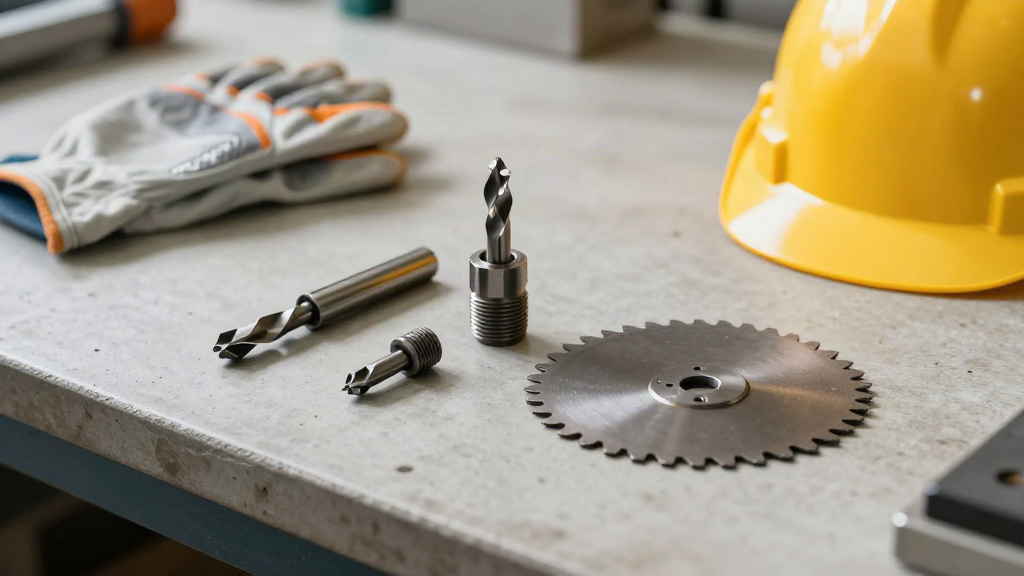
Core Drilling Accessories Explained: Matching Bits, Adapters and Blades to the Job
Core drilling accessories are the parts that decide whether a hole in reinforced concrete, brick or asphalt comes out clean on the first pass or turns into an afternoon of swapping, swearing and burned-out diamonds. Get the bit, the adapter and the blade right for the material in front of you and the job runs quickly; get them wrong and you will spend more on replacements than the whole drill cost.
This guide compares the main accessory types by material and application, so you can match the right bit, arbor and blade to the task before you start drilling.
What counts as a core drilling accessory
“Core drilling accessories” is a broad term. In practice it covers three families of kit that all work together:
- Core bits – the diamond-tipped barrels that actually cut the hole.
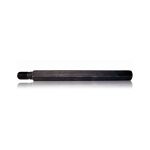
- Adapters, arbors and extensions – the parts that connect the bit to your drill rig or hand-held machine.
- Companion cutting accessories – the diamond blades you use to chase, square off or cut a slot before or after the core is drilled.
Buying one without the others is where most jobs stall. A perfect core bit on the wrong arbor will not fit the spindle, and a blade chosen for the wrong abrasive will glaze over within a metre of cutting.
Diamond core bits: matching the bit to the material
Core bits are not interchangeable across materials. The bond hardness – how firmly the diamond grit is held in the metal matrix – is what changes, and it needs to match how abrasive the surface is.
Reinforced concrete. You want a harder bond with a stronger segment, because the steel rebar will catch softer segments and rip them. Segmented bits handle this better than continuous-rim bits, and they clear slurry more effectively on deep holes.
Brick and block. These cut easily, so a softer bond that exposes fresh diamond quickly keeps the cut fast. A continuous-rim or turbo bit is usually enough, and it leaves a cleaner edge than a coarse segmented bit.
Green (uncured) concrete and asphalt. These are highly abrasive and eat cutters, so you want a bit built with wear resistance in mind – the same principle that governs our abrasive materials diamond blades.
A simple rule: the harder and denser the material, the harder the bond; the more abrasive and crumbly the material, the more the bond needs to resist wear rather than self-sharpen.
Adapters and arbors: getting the connection right
The adapter is the least glamorous accessory and the one most likely to cause a failed job. It has three jobs: hold the bit true, transfer torque without slipping, and let you reach the right depth.
Thread size. Core bits and rigs use standard thread patterns, and mismatches are common when mixing brands. Check the spindle thread on your machine against the bit’s shank thread before ordering – an adapter is cheap, a wasted hire day is not.
Arbor type. Hand-held core drills often use a hex or SDS-style shank arbor, while rig-mounted bits use a threaded arbor with a pilot. Never ream out an adapter to make a bit fit; buy the correct one.
Extensions and depth. If you need to core through a thick wall, a bit extension keeps you drilling in one clean pass instead of stepping up bit sizes, which weakens the hole edge. Use the shortest extension that reaches the depth – every extra joint adds run-out.
Blades alongside your core drilling work
Most core drilling jobs also involve a cut somewhere: a chase for a conduit, a slot for a cable, or a neat edge around the opening. That is where diamond blades come in, and they follow the same material-matching logic as bits.
For road surfaces, reinstatement and utility trenching, an asphalt-specific blade cuts fast and stays cool because its bond is designed for the abrasive nature of bituminous material – see our asphalt diamond blades range, which includes 350mm looping blades and the Mexco X10, X90 and XCEL grades.
For green concrete and other abrasive surfaces, the abrasive-grade blades reduce wear and extend blade life across the same Mexco grades. The table below summarises how the accessory families compare by job.
Quick comparison: which accessory for which job
| Job | Core bit | Adapter | Blade |
|---|---|---|---|
| Deep hole in reinforced concrete | Segmented, hard bond | Threaded arbor with pilot | Not usually required |
| Clean hole in brick or block | Continuous-rim or turbo, soft bond | Hex or SDS shank arbor | Turbo blade for the chase |
| Road surface or trench in asphalt | Rarely used | – | Asphalt looping blade, 350mm |
| Slot in green concrete | Segmented, wear-resistant | Threaded arbor or extension | Abrasive-grade diamond blade |
| Thick wall, single pass | Standard bit plus extension | Bit extension, shortest that reaches | – |
Maintenance and safety essentials
Accessories last longer and cut safer when you treat them like precision tooling, not disposables.
- Keep the water flowing. Core bits and blades both rely on water to flush slurry and cool the diamond. Starve them and the segments glaze and stop cutting.
- Let the tool do the work. Pushing too hard on a core bit bends the barrel and puts strain on the adapter joint. Steady feed, correct speed.
- Check the bond before you blame the machine. If a bit or blade stops cutting, it has usually glazed; dress it on a softer abrasive block rather than forcing it.
- Inspect adapters every use. A worn thread or a bent arbor is how bits get thrown out of a rig. Replace before it fails mid-hole.
- Match PPE to the task. Silica dust, slurry and flying fragments are all part of core drilling, so eye, hearing, respiratory and hand protection belong on the kit list every time.
Choosing your core drilling accessories
The short version: match the bit bond to the material, match the adapter to your machine’s spindle and depth, and match the blade to the surface you are cutting. Buy the three as a set for the job rather than piece by piece, and the cut comes out clean the first time.
TallTree Utility Suppliers stocks diamond core bits, adapters and diamond saw blades for civils, reinstatement and utility trenching work, alongside the PPE to do it safely. If you are putting together a core drilling kit for a specific material, our team can match the bit, arbor and blade to the job.

 Overhead Safety Equipment
 Carabiners and Scaffold Hooks
 Fall Arrests
 Harnesses
 Lanyards
 Overhead Kits
 Slings
 Lifting and Tensioning
 Cable Pullers
 Poling
 Live Line Working
 Face Shields
 Live Working Accessories
 Insulated Hand Tools
 Insulated Allen Keys
 Insulated Link Extractors
 Insulated Nut Spinners
 Insulated Pliers and Cutters
 Insulated Ratchets and Sockets
 Insulated Saws and Knives
 Insulated Screwdrivers
 Insulated Spanners
 Insulated Specialist Tools
 Insulated Tool Kits
 Insulated Wedges
 Hand Tools
 Hammers
 Tool Bag
 Torches

 Carabiners and Scaffold Hooks
 Gate Guards

 Insulated Digging Tools
 Pole and Post Shovels
 Core Drills
 Core Drill Accessories
 Reinstatement
 Diamond Saw Blades
 Abrasive Materials Diamond Blades
 Asphalt Diamond Blades
 Ceramic Diamond Blades
 Dual Purpose Diamond Blades
 Flush Cut Diamond Blades
 Hard Materials Diamond Blades
 Metal Cut Diamond Saw Blades

 Demarcation
 Lamps
 Ramps
 Safety Traffic Barriers
 Traffic Cones

 Riggers
 Safety Boots
 Safety Shoes
 Safety Trainers
 Socks
 Wellingtons

 Flame Retardant Workwear
 Flame Retardant Accessories
 Flame Retardant Coveralls
 Flame Retardant Hats and Snoods
 Flame Retardant Jackets and Fleeces
 Flame Retardant Jumpers and Hoodies
 Flame Retardant Polo and T-Shirts
 Flame Retardant Trousers
 Flame Retardant Under Garments
 Flame Retardant Waterproof Coveralls
 Flame Retardant Waterproof Jackets
 Flame Retardant Waterproof Trousers
 Workwear
 Base Layers and Thermals
 Body Warmers
 Fleeces
 Hats and Snoods
 Hoodies
 Jackets
 Jumpers
 Trousers
 Coveralls
 Waterproof Clothing
 Waterproof Jackets
 Waterproof Trousers
 Hi Vis Vests
 Holdalls & Kit Bags


 Eye Protection
 Gloves
 Head Protection
 Bump Caps
 Chin Straps
 Ear Defenders
 Hard Hats
 Helmet Accessories
 Sweat Bands
 Ear Defenders
 Face Masks
 First Aid
 Hand Wipes
 Spill Kits