


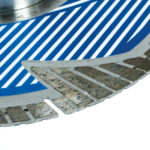

Flush Cut Diamond Saw Blade
Price range: £49.10 through £207.50 Exc. Vat
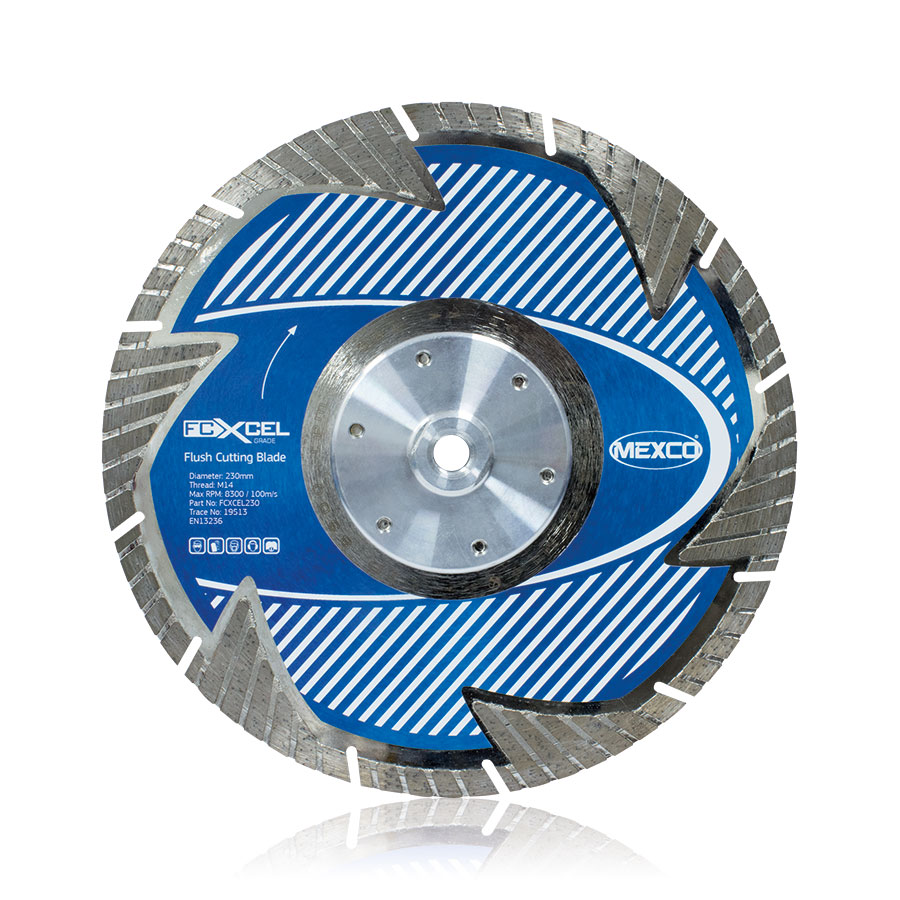
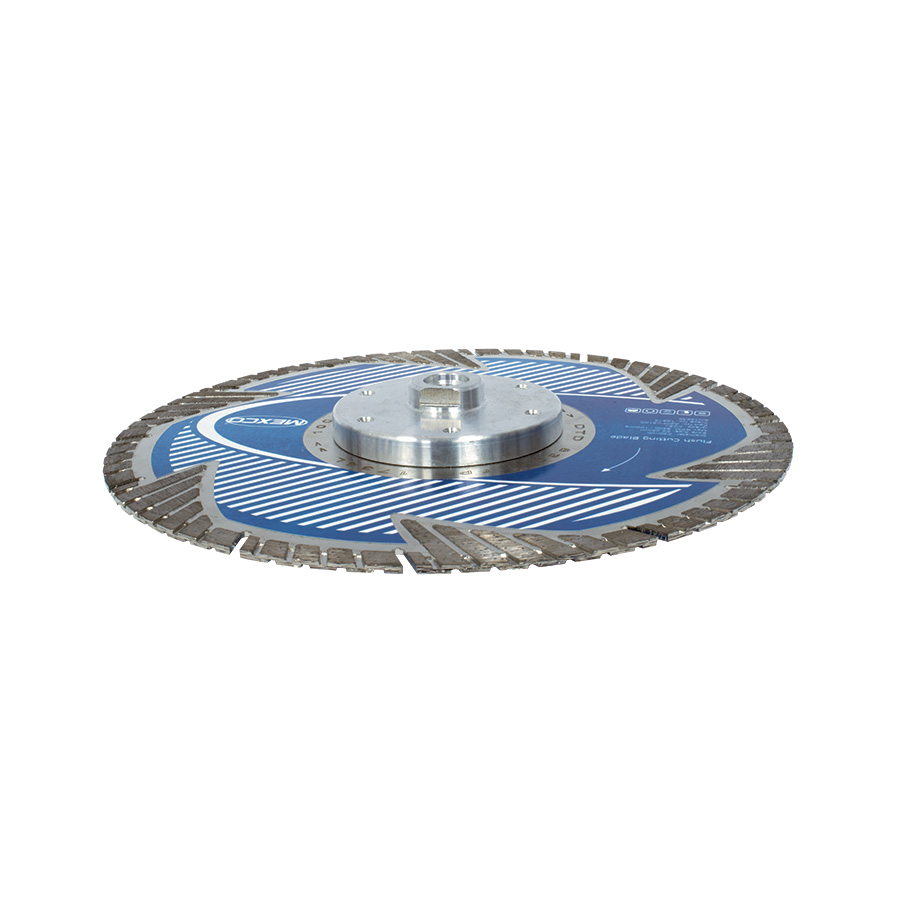
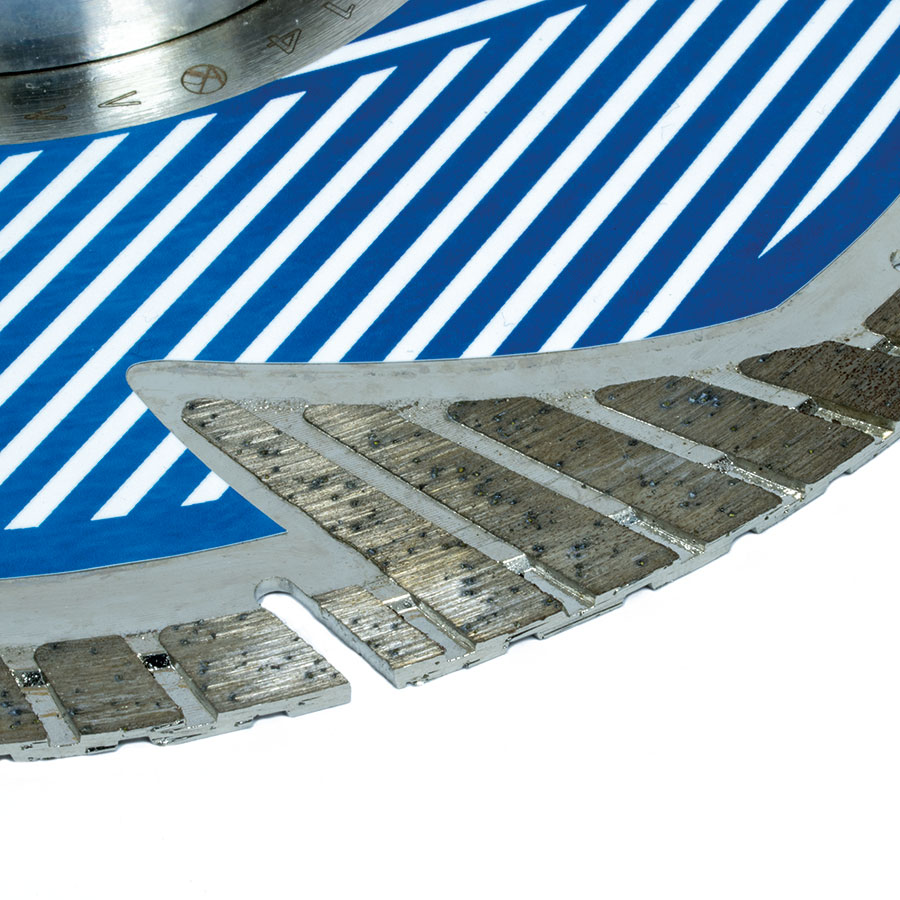
The FCX – Flush Cut Diamond Blade is designed to be used on angle grinders for both straight and flush cutting. These blades are fitted with a detachable flange mount with an M14 thread that attaches directly to most angle grinders. The flush face give the opportunity for deep cutting and flat finishing.
- Segment Height: 10mm
- Dry / Wet: Dry
- Grade: XCEL
- Gullet Type: Narrow Angled
- Recommended Tool: Angle Grinder
- Segment Attachment: Sintered
- Segment Type: Segmented
- Undercutting Protection: No
- Ventilation: No
Flush Cut Diamond Saw Blade
When a cut needs to finish cleanly against a wall, kerb, joint, floor edge or other fixed surface, an ordinary diamond blade can leave behind material that still needs to be removed by hand. A professional flush cut diamond saw blade is designed to solve that problem. It allows operators to cut tight to vertical or horizontal surfaces with greater control, helping construction, civils and reinstatement teams complete accurate work without unnecessary breaking out, grinding or rework.
Our flush cut diamond saw blades are selected for demanding site conditions where precision, durability and dependable cutting performance matter. Whether you are opening a pavement for utility access, trimming concrete around a repair area, cutting alongside kerbing or making controlled cuts close to structures, the right blade helps create a neater finish and a more efficient workflow.
Applications
- Facing Bricks
- Slate
- Hard Aggregate Concrete
- Reinforced Concrete
- Concrete Kerbs
- Slabs
- Lintels
- Concrete Pavers
Designed for Controlled Cutting Tight to Surfaces
Flush cutting is often required where there is little room for compromise. In reinstatement work, a poor cut can create ragged edges that are difficult to repair properly. In civils projects, cutting too far from a kerb, wall or existing slab can leave excess material that must be removed with additional tools. On construction sites, inaccurate cutting close to finished surfaces can damage adjoining materials or increase the time needed to achieve the required final detail.
A flush cut diamond saw blade is engineered to work close to the edge of a saw guard, machine body or supporting surface, depending on the equipment configuration. This allows the blade to reach areas that conventional center-mounted blades may not be able to access effectively. The result is a cut that can run nearer to the obstruction, reducing the need for follow-up work and supporting a cleaner, more professional finish.
For teams carrying out repeated repair, maintenance or installation work, this can make a significant difference. A cleaner cut helps prepare the area for reinstatement, joint repair, sealant application, replacement sections or surface finishing. It can also reduce the risk of leaving unsupported edges, over-cutting surrounding materials or creating an inconsistent line along the repair zone.
Professional Diamond Blade Performance for Construction and Civils
Construction and civil engineering environments place heavy demands on cutting equipment. Materials can vary across a single site, with operators moving between concrete, reinforced concrete, asphalt, blockwork, paving and other abrasive surfaces. The blade must be capable of maintaining controlled cutting action while coping with demanding working conditions, variable material density and the practical pressures of keeping a job moving.
Our flush cut diamond saw blade range is suited to professional applications where reliability is essential. Diamond segments are designed to provide a balance of cutting speed, blade life and finish quality, helping operators work efficiently without sacrificing control. The exact blade choice should always reflect the material being cut, the power and type of saw being used, the required depth of cut and whether wet or dry cutting is appropriate for the task.
Rather than treating every job as the same, we help customers select blades that match their application. A blade chosen for hard concrete will not necessarily perform in the same way on abrasive asphalt. Likewise, a blade intended for a particular flush-cut saw arrangement may not be suitable for a standard floor saw or hand-held machine. Choosing correctly at the start helps protect the blade, the saw and the quality of the finished cut.
Flooring, Jointing and Internal Construction Work
Flush cutting is also relevant in internal environments where concrete floors, screeds or masonry surfaces need to be cut close to walls, upstands, thresholds or fixed equipment. Depending on the saw and dust-control arrangements available, a suitable blade can help operators achieve precise access in confined areas.
When working indoors or in occupied environments, planning is especially important. Dust suppression, extraction, noise management, access restrictions and protection of surrounding finishes should all be considered before cutting begins.
Helping You Achieve a Cleaner Finish
One of the main advantages of a flush cut setup is the quality of the edge it can help create. A close, controlled cut can reduce the amount of material left between the blade path and the adjoining surface. This is particularly beneficial where hand tools would otherwise be needed to chip away the remaining strip, potentially damaging the edge or slowing the project down.
For repair and reinstatement contractors, cleaner edges can support better preparation for subsequent stages of work. Once the cut has been made, the area can be broken out, cleaned and prepared with a more consistent boundary. This can be useful when installing repair mortar, asphalt, concrete, resin products, joint sealants or replacement paving units.
Controlled cutting also helps teams work with greater confidence near existing assets. While care must always be taken around buried services, structures, finished surfaces and sensitive areas, the ability to position the blade closer to the intended line can improve overall accuracy. Good blade control, correct machine handling and suitable site preparation remain essential throughout the task.
Built for Demanding Site Conditions
Professional cutting equipment must perform in environments where time, access and material conditions can change quickly. Construction and civils teams need consumables that are practical, dependable and suited to regular use. A quality flush cut diamond saw blade is built to withstand the demands of repeated cutting while helping operators maintain a consistent approach from one job to the next.
Blade life will always depend on the material being cut, the machine setup, operating technique and whether the blade is used within its recommended parameters. Excessive pressure, incorrect rotation direction, poor alignment or unsuitable cutting conditions can reduce performance and cause unnecessary wear. Allowing the blade to cut at its intended rate, rather than forcing it through the material, helps support better results and can extend usable blade life.
It is also important to inspect blades before use. Operators should check for damage, excessive wear, missing segments, cracks, distortion or other signs that the blade should be removed from service. A blade should only be fitted to compatible equipment by a competent person, with all guards and safety features correctly in place.
Safe and Effective Use of Flush Cut Blades
Diamond blades are powerful cutting tools and should always be used with care. Before starting work, operators should confirm that the blade is suitable for the saw, correctly mounted and rotating in the required direction. The work area should be assessed for hazards, including hidden services, unstable materials, trip risks, dust exposure and the presence of people near the cutting zone.
Appropriate personal protective equipment should be worn in line with site requirements and risk assessments. This may include eye protection, hearing protection, respiratory protection, gloves, safety footwear and suitable workwear. Dust control should be planned before work begins, particularly when cutting concrete, masonry or other silica-containing materials.
During cutting, the saw should be allowed to do the work. Applying excessive force can cause overheating, reduced cutting efficiency and premature blade wear. Operators should maintain stable footing, keep the machine under control and avoid twisting or side loading the blade. If cutting performance changes noticeably, work should stop and the blade, machine and material conditions should be checked.
| Brand | Mexco |
|---|---|
| Diameter (mm) | 115, 125, 230 |
Related products


Abrasive Materials Diamond Blade – Mexco X90 Grade Saw Blade
In stock

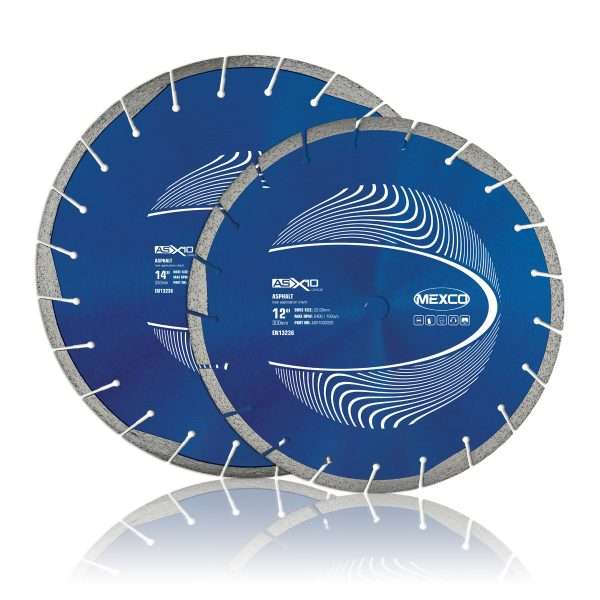
Asphalt Diamond Blade – Mexco X10 Grade Saw Blade
In stock
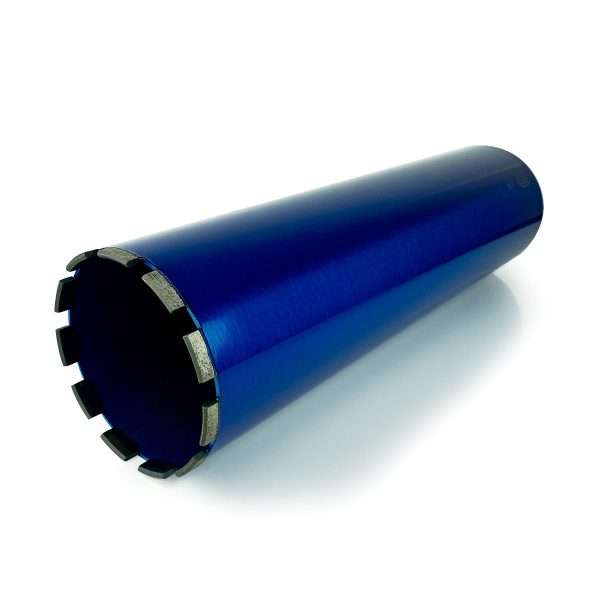
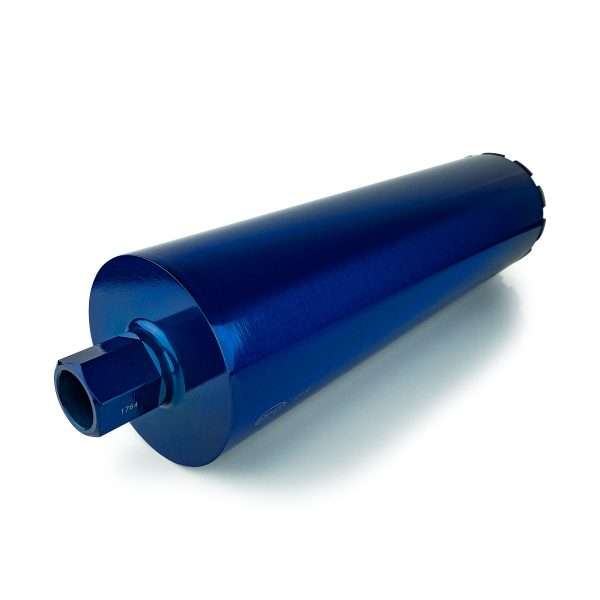
Diamond Core Drill Bit – Mexco 11/4″ UNC Wet Core Drill Bit
In stock
Diamond Core Drill Bit – Mexco 1/2″ BSP Wet Core Drill Bit
In stock
GP Concrete 12mm Diamond Saw Blade
In stock


Shocksafe Insulated Sledge Hammer
In stock
Tri Purpose Diamond Saw Blade
In stock
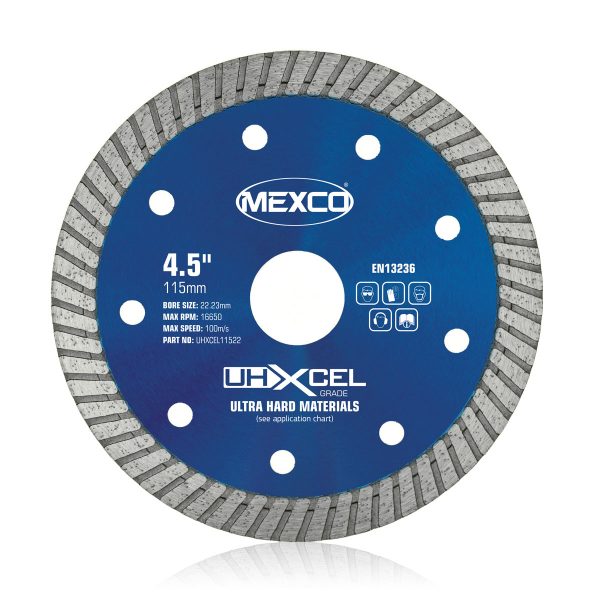
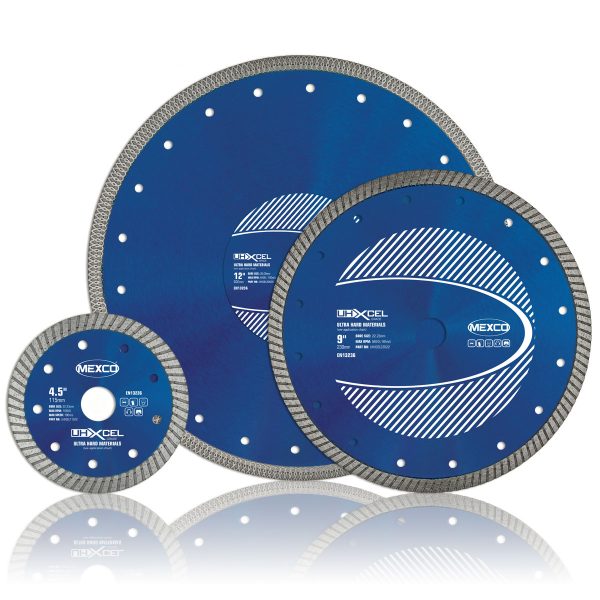
Ultra Hard Materials – Mexco UHXCEL Diamond Blade
In stock

 Overhead Safety Equipment
 Carabiners and Scaffold Hooks
 Fall Arrests
 Harnesses
 Lanyards
 Overhead Kits
 Slings
 Lifting and Tensioning
 Cable Pullers
 Poling
 Live Line Working
 Face Shields
 Live Working Accessories
 Insulated Hand Tools
 Insulated Allen Keys
 Insulated Link Extractors
 Insulated Nut Spinners
 Insulated Pliers and Cutters
 Insulated Ratchets and Sockets
 Insulated Saws and Knives
 Insulated Screwdrivers
 Insulated Spanners
 Insulated Specialist Tools
 Insulated Tool Kits
 Insulated Wedges
 Hand Tools
 Hammers
 Tool Bag
 Torches
 Carabiners and Scaffold Hooks
 Gate Guards
 Insulated Digging Tools
 Pole and Post Shovels
 Shovels
 Core Drills
 Core Drill Accessories
 Reinstatement
 Diamond Saw Blades
 Abrasive Materials Diamond Blades
 Asphalt Diamond Blades
 Ceramic Diamond Blades
 Dual Purpose Diamond Blades
 Hard Materials Diamond Blades
 Metal Cut Diamond Saw Blades
 Demarcation
 Lamps
Lamps Ramps
Ramps Safety Traffic Barriers
 Traffic Cones
 Riggers
 Safety Boots
 Safety Shoes
 Safety Trainers
 Socks
Socks Wellingtons
 Flame Retardant Workwear
 Flame Retardant Accessories
 Flame Retardant Coveralls
 Flame Retardant Hats and Snoods
 Flame Retardant Jackets and Fleeces
 Flame Retardant Jumpers and Hoodies
 Flame Retardant Polo and T-Shirts
 Flame Retardant Trousers
 Flame Retardant Under Garments
 Flame Retardant Waterproof Coveralls
 Flame Retardant Waterproof Jackets
 Flame Retardant Waterproof Trousers
 Workwear
 Base Layers and Thermals
 Body Warmers
 Fleeces
 Hats and Snoods
 Hoodies
 Jackets
 Jumpers
 Trousers
 Coveralls
 Waterproof Clothing
 Waterproof Jackets
 Waterproof Trousers
 Hi Vis Vests
 Holdalls & Kit Bags

 Eye Protection
 Gloves
 Head Protection
 Bump Caps
 Chin Straps
 Ear Defenders
 Hard Hats
 Helmet Accessories
 Sweat Bands
 Ear Defenders
 Face Masks
 First Aid
 Hand Wipes
 Spill Kits